|
O'REILLY Bensonhurst, Brooklyn, boy.
SCHIRRIPA Yes, sir.
O'REILLY Okay, so this is what I don't understand. So your mother is Jewish, and your father is Italian. Yeah. That must have been quite a house.
SCHIRRIPA Well, you know, the thing is my mother was raised kind of like by Italians. So she was, she fit right in. You know what I mean? She was cursed in Italian, cooked Italian. So she was...Like kind of more Italian than she was Jewish, you know, but I had a whole Jewish side of the family. Comedy club. That's where I started. It was an improv, right? Then they, I took over, there was a topless show, and then there was a female impersonator show. I was running it, making a lot of money, a lot of tips. Those are the days you could still, you know, I wore a tuxedo. You still had to pay, you had to get a good seat. And that's where I started acting. Of course, I was working with a lot of comics, Bill Maher, Richard Belzer.
O'REILLY Were you the MC?
SCHIRRIPA No, no, I just was seating people in the back of the room. They would say, hey, you know what? I'm doing this little short film. You know, why don't you come and do this? Kevin Pollack. He said, come on, do an HBO special. I played a bouncer in his thing, and it was just fun to me, it was fun. I had no, I never read a script, never did anything, I flew myself to LA. I had a ball, literally a cliché. I got literally high from doing it.
O'REILLY So it was meant to be, you didn't seek it, it wasn't on your mind, you're a basketball player from Brooklyn, you ride that train, then you go to Vegas, you ride that train. Then you start to get little roles in LA, and you wind up in two of the biggest monster hits in modern television. So let's zero in on the Sopranos. Which you are still making money from.
SCHIRRIPA Oh yeah.
O'REILLY You're going out all over the world, you were just in England and they couldn't get enough of you over there.
SCHIRRIPA It was crazy. We did 14 shows in 10 cities, started in Belfast, Nottingham, Birmingham, London, Edinburgh, I mean we went through the whole thing. Me and Michael Imperiali, we have a comic with us on stage, sold 27,000 tickets.
O'REILLY Unbelievable.
SCHIRRIPA Telling stories, funny behind-the-scenes stories, all positive.
O'REILLY We'll get to that in a minute, but Gandolfini and Tom Selleck were the two titans that these shows revolved around, both very interesting personalities. I know Sellec a little bit. I never met Gandolfini. Now, when you went on the set to play a low-level gangster, a New Jersey gangster, there's Gandolfini. Who already had established himself as one of the great actors in the country, okay? How did he behave on the show?
SCHIRRIPA ...Always, always trying to help you. My first scene is with him, Stevie Van Zandt, Vinnie Pastore, big pussy, Paulie Walnuts, Tony Cerrico. That's my first scene. I didn't know anyone. A lot of these guys knew each other. I came in the second season, the beginning of the second season. I knew no one. Said hello, did the scene. Jim is trying to help me. I'm supposed to be intimidated, scared. He's helping me. I was green. I had work, don't get me wrong. I had done a bunch of stuff, but this is a different level. Boom, I did a few movies, and he's trying to help me. He's yelling at me, screaming at me. He's trying to get me where I need to be. Once I do that, the scene's over. I'm one of the guys. He's just trying to help. At one point, he said, come on, me, him, Dominic Chianese, Uncle Junior. Come to my trailer, let's go over the lines, let's run lines. It's almost an out-of-body experience. I'm going myself, How the hell did I get here? I'm watching these guys on TV a week ago. Now I'm here with the three of them.
O'REILLY And they're all very eccentric characters.
SCHIRRIPA Absolutely, but good guys. Jim was always a pro. People say, did you guys have fun on the set? Yeah, we had fun. It was all business. He was working 16 hours a day, five days a week.
O'REILLY Mm-hmm.
SCHIRRIPA Listen, a great guy not without problems. I mean, that's common knowledge.
O'REILLY Right.
But not on the set never when he was working, you saw none...There was none of that.
O'REILLY Was he the leader of the gang?
SCHIRRIPA Absolutely.
O'REILLY Okay.
SCHIRRIPA In a positive way, so you can't come in, and you know, it was a good vibe. It really was like a family. We were close, very respectful. Nobody could come in and be disrespectful to one another. That wasn't flying either.
O'REILLY All right, so Gandolfini was kind of like the chief of police.
SCHIRRIPA I mean, you know, but kind of by example, you know, I mean, he was the guy, you know?
O'REILLY But it was such an intense program. Do you guys have any laughs off camera?
SCHIRRIPA Yeah, no, no. Absolutely. We went out constantly. I mean, we enjoyed every moment. I mean, those guys, Michael, Jim were in their late 30s. I was in my early 40s. We went, we were like playing for the Yankees.
O'REILLY Where do you go in Jersey?
SCHIRRIPA No, here.
O'REILLY Oh, in New York.
SCHIRRIPA We all lived in Tribeca, back end of Battery Park.
O'REILLY Ah, so you're running around.
SCHIRRIPA All over.
O'REILLY At the end of the show, the run of the show, did it wear you guys down? Were you going, oh my God, you know, how long can we keep this up? It's so intense.
SCHIRRIPA I don't think so. I think every single person would have gone on you to do that show. Jim was getting burnt out, and David and when David Chase came to us and said this is gonna be the last season, nobody said...everybody said okay. Everyone said okay, that's fine. I mean, whatever you want, you took us here. You're the boss. I mean, Jim did most of the heavy lifting.
O'REILLY Sure. He was a plotline guy, and Gandolfini died a short time later.
SCHIRRIPA Well, no, the show ended in 2007, Jim died in 2013.
O'REILLY Okay, that's not a long period of time for men that age. And he died in kind of mysterious circumstances, I think, you know?
SCHIRRIPA No, took his son to Italy, and he died of a heart attack. I mean, there was no, there was no surprise.
O'REILLY Were you surprised?
SCHIRRIPA Was I surprised? Well, I tell you what, I got a call from our attorney. We all had the same business manager attorney. And I was at Yankee Stadium with Mitch Modell and Tommy Losada, you know, before the game, and I got to call and he, he said, you by yourself? And I said, I'm at the game. And he said, Jim passed away, and I was stunned. My legs came out from under me. I said, are you sure it's not one of these hoaxes?
O'REILLY Yeah, I was surprised.
SCHIRRIPA And he said, no. And then I said I had to leave. I mean, I was shaken seriously. And I was going down the West Side Highway, my phone was blowing up, CBS, NBC, blah, blah, blah, blah. I wasn't talking to anyone.
O'REILLY So then you segue into Blue Bloods, which is a whole different thing because it's a network show. Guy named Kevin Wade was the runner, picks you up, contrasts you to Bridget Moynihan, Beauty and the Beast, or whatever you want to call it. But it was a brilliant move. And so now you're in a tighter structure with CBS. It's not like The Sopranos. There's a big difference in production, right?
SCHIRRIPA Yeah, well, because the surprise was shot like a movie. Don't forget, it was an hour with no commercials. A network TV show.
O'REILLY 44 minutes.
SCHIRRIPA 42 maybe, you know? So it's a whole different thing. But the writing was great. What I enjoyed a lot about Blue Bloods, everyone got along wonderfully.
O'REILLY Great cast.
SCHIRRIPA Really nice people.
O'REILLY But the guy that everything centered around, like Gandolfini, was Tom Selleck.
SCHIRRIPA Well, listen, iconic TV character. I mean, he's a star, Tom, right? A star, a star is magnum. Did a lot of good movies, too.
O'REILLY Well, this is my question. So Gandolfini, when he starts The Sopranos, wasn't mega. Tom Selleck, his private jet guy. Here I am.
SCHIRRIPA On The Sopranos, you had no input. What was on that page, you'd better say. End of story.
O'REILLY Right.
SCHIRRIPA David Chase wrote it, you'd better be word-perfect. Word perfect. Now, I could ask a question and say, wait a minute, well, when Bobby does this, sure. But if I say, well, you know what? I don't want to say this line, and I don't want to see that line. You'd better say the line, and you're not around for the next thing.
O'REILLY You get whacked.
SCHIRRIPA 1,000%.
O'REILLY Right.
SCHIRRIPA For real. For real. Okay? So there was none of that. You did not have that input.
O'REILLY It's like a play, right.
SCHIRRIPA Tom had a lot of input.
O'REILLY You bet he did.
SCHIRRIPA Tom had a lot of input. Tom knows what he's doing. Guy's an actor for 50 years.
O'REILLY But, he's a traditional guy. He brought that in, and that's what catapulted this show.
SCHIRRIPA And he's a common-sense guy.
O'REILLY Right. He's not some kind of flaky.
SCHIRRIPA No, and he knows, and he'll come in, and he'll say, well, the light there, and why are we shooting that? And he'll question, and he knows what he's talking about.
O'REILLY But if he wants it, he gets it.
SCHIRRIPA Well, of course.
O'REILLY Right, he's the guy.
SCHIRRIPA He's the star of the show. Now, that was a big difference. Jim read the script, and he did it like the rest of us. He read the script...
O’REILLY But Selleck had power.
SCHIRRIPA Tom would give his opinion to the writers and...
O'REILLY And the writers would do what he pretty much wanted to do. You know, and it worked.
SCHIRRIPA Yeah, of course it worked, there was a, listen, when the show ended, it was what? Six million people plus three or whatever?
O'REILLY Number one prime time CBS show.
SCHIRRIPA For years.
O'REILLY What's it like growing up with a Jewish father, a mother's half Filipino? You're a United Nations down there in the suburb of San Francisco.
SCHNEIDER Well, it was really great because we lived in a place that money didn't really matter. Everybody was, it definitely the suburbs. This is, we were the end of the baby boom, and it was a really great time in America. So you know, we're, and we were actually, you know, we had Filipinos, there were Jews, and the Filipinos are, they assimilate, and that's why the Filipinas are so successful. Most people don't know this, but the highest earners in America, Filipino Americans. They average 93,000 per cap. And so that's, and you don't hear about it because they don't want you to know. Rob, don't tell anybody, please. Let the black and white people kill each other. We're going to be okay in the suburbs. So, but they really do well because they assimilate. And when you get somebody from over the Philippines, they'll marry into the culture. They'll meet people. They'll become part of the culture, and they'll definitely know and learn the language. So that was what I really grew up with. And I also grew up as somebody who appreciated America like you wouldn't believe. I remember my mom, anyone who said anything against America, she had two words for them. Get out! You don't like America. It's the greatest country in the history of the world. We have freedom and opportunity. You have no idea what it's like. Get out!
O'REILLY I was looking for a little levity, but not stupid stuff, a little, an intelligent guy to come on once a week and put the news into some kind of perspective with an entertainment value. So, at the time, Dennis Miller was working at CNBC, and he had an hour show with a monkey. With a monkey. No one knew why the monkey was there. But Miller would talk to the monkey, and the monkey would just run around, okay? Well, the show did not work, okay, and they...
SCHNEIDER Imagine that. That would kill now.
O'REILLY They killed the show. So I run into Miller in Manhattan, where we are now, and I didn't know him, and I said, you know, I like the monkey. Lit up, because everybody hated the monkey except me, I liked the monkey. And then I said, you know, would you mind if I maybe got your agent, and no, no, you know, Miller, just blew it off. So I went to the head of Fox News, a guy named Roger Ailes, and I said look, I wanna put Miller on a weekly basis, it's going to be a workshop to give him a contract, but we'll give him three or four weeks to see. He goes, is that the guy with the monkey? Said yeah, we don't have to hire the monkey. Okay, we're not gonna hire the monkeys. We'll have a few bananas All right, so Miller will feel it home. So the rest is history.
SCHNEIDER That's fantastic.
O'REILLY I brought him on, and he and then we toured.
SCHNEIDER That's right. Those tours were great. You guys were ahead of your time.
O'REILLY It was amazing.
SCHNEIDER You got to have...you got to have, it was pre-podcast era, when you guys got to actually, people would come out, and then you would actually get to... They would get to hear people that they listened to, and it was a wonderful reaction that preceded this whole era.
O'REILLY Why do you think that the Trump administration is so vilified by the Kimmel's, the Colbert's, the network news? Why do they hate him so much?
SCHNEIDER I think it's liberal women that have lost their minds are controlling these men. And these guys have no more balls.
O'REILLY Oh, I thought you said they chained...
SCHNEIDER Kimmel has no balls. Kimmel is ball-less. He's been de-balled by his wife.
O'REILLY Really?
SCHNEIDER His wife is the head writer of the show. She used to be an assistant writer, now she's the writer. And I think that's completely ruined him. I do. I mean, I'm sorry, Jimmy, maybe I'm wrong, but I think I'm right.
O'REILLY Thirty years at 60 Minutes, 30 years, the man survived at CBS. I survived about eight months at CBS, he's 30 years. Anyway, let's begin with older folks, Americans. And they watch CBS now. And it's not anywhere near what it was. What did Deuce happened?
KROFT Algorithms. That's my short answer. I mean, technology, the fact that everything has gotten more complicated, much more complicated. The fact that, you know, it started with cable TV, and it started eroding the audience of the three major networks. And it just got down to a point where I think the people that own the networks decided to write it off, that it was not that important to them anymore, even though it still produces a huge amount of money, but that the future was someplace else. But, you know, the budgets dwindled, and people had to do with what they got.
O'REILLY But it's also about performance. So, Mike Wallace, before he died, I became fairly good friends with him. He liked The Factor, he liked my, whatever you want to describe me as. He was the one who really liked me and kind of identified with it. But you had Hewitt, and you had Safer, and you had Wallace, and you had all of these pros, yourself. Really knew what they were doing. And now, I'm sorry, Tony Dokoupil, is that his name? He looks like a nice guy, but he wasn't at Chernobyl like you. And so it's not, it's like a sports team that once had all these superstars and now they're in eighth place.
KROFT Yeah, the one thing that all the people that you mentioned, Ed Bradley and Leslie, we all had either, we had successful careers at CBS News before we got to 60 Minutes. And we had all been either overseas or in Washington, covering the White House or one of those places. And there was a level of experience that doesn't really still exist. I mean, those positions are occupied, but everything has changed. And I can remember when I told Jeff Fager that I was going to leave or that I was going to retire. And he says, well, you know, what are we going to do? And I said, you know, go out and find somebody who knows how to write and is a good reporter. And he said, they aren't out there.
O'REILLY It's true. There's no minor leagues.
KROFT I can remember when I was tapped to go to 60 Minutes, I thought this was fantastic. And I expected a lot of people would just come up and say, that's really great. I'm really happy for you, whatever. And then you realize, after a while, that not everybody was happy that I got this job. There were other people...
O'REILLY There were more competition.
CROFT There were other people that wanted it. And so then you've all of a sudden made a bunch of enemies. And that's, it's just, you know, it is a snake pit.
O'REILLY It is.
KROFT It's a snake pit.
O'REILLY Is it any way to live? If you had to do it again, would you do it again?
KROFT I think that I, no, I probably wouldn't do it again.
O'REILLY Really?
KROFT Yeah. I hated it.
O'REILLY If you were covering President Trump, you would be skeptical of him.
KROFT Well, I'm trying to be skeptical of everybody.
O'REILLY Would you be fair to him?
KROFT You know, fairness is a strange word. I think my big problem with Trump, it feels to me, and this is 60 Minutes and CBS, I kind of feel like we're in federal receivership and that-.
O'REILLY Well, he's a populist. He's a strong man.
KROFT Yeah, exactly. And the trustees of this receivership are Trump, Ellison, and Bari Weiss, and they have said quite openly that they think that they need to adjust.
O'REILLY Yeah, they need to be fairer to him, more fair. And I agree with that because as we talked about with Pelley and I know what I'm doing, so do you, I can see when Leslie Stahl is interviewing Trump and she says to him, well, there's no evidence of Russian collusion, you know, blah, blah, blah, and I'm going, whoa, that's not how you pose that question. It's not. You interviewed Obama 17 times. 17 times!
KROFT Yeah. Something like that.
O'REILLY Why did he like you?
KROFT I think he liked me for, I'm not so sure it was personal. I think that he liked the fact that 60 Minutes could deliver almost 20 million people every time he came.
O'REILLY But he chose you. He could have had Mike.
KROFT I think because I did the first story on him. I mean, I was the one that covered him during the presidential campaign.
O'REILLY I think he trusted you, Obama.
KROFT Oh, I think he did trust me, and I think he knew that I was not gonna, I was not gonna like...
O'REILLY Cheap shot him.
KROFT Cheap shot him.
O'REILLY And you didn't cheap-shot him.
KROFT And I didn't.
O'REILLY Now, in order not to cheap-shot him, you had to be a little light on him sometimes. I remember those interviews, and sometimes I could see, I said, oh, Kroft wants to ask this, but he doesn't want to derail the whole thing. Am I wrong?
KROFT I think you're probably wrong in the sense that we did some, there was never an interview that we did with him, that we didn't ask him about all of the...criticisms.
O'REILLY But you let him answer rather than challenge.
KROFT Because he, you know, Obama was an interesting person. I'd never really seen a politician like him. In all the years that I interviewed him, he never once said, stop, I need to talk to my aides to find out the answer.
O'REILLY I interviewed him three times.
KROFT He was in command.
O'REILLY With me, I challenged him.
KROFT Yeah.
O'REILLY Okay.
KROFT Well, I challenged him, too. You apparently haven't seen the last couple of interviews I did with him.
O'REILLY And they got tougher as you went along, okay, because he got in more trouble as you went along, to be fair.
KROFT You know, I mean, the situation was really, really a mess.
O'REILLY He had a long honeymoon, and then he was, you can keep your doctor here if you want, your doctor, and all of a sudden, all hell broke loose.
KROFT But for the first four years of that presidency, the issue was the financial situation.
O'REILLY Yeah.
KROFT You know, we had just pretty much...
O'REILLY Over the cliff with Bush.
KROFT Over the cliff with Bush, and the worst of it, some of the worst, of it was when he was running, when he was president-elect. And I think that some of those things, you know, all of the bailout of the banks and everything.
O'REILLY Unlike Trump, Obama was a realist, and he was a consensus seeker. Would I be correct there?
KROFT Yeah. I don't think nearly as liberal as people point him out to be.
O'REILLY No, I agree with that.
KROFT People always used to talk to me about 60 Minutes and say, oh, it's so liberal. You know, I never really thought of it as being liberal, in part because Don and Mike Wallace were both Republicans.
O'REILLY Right. They didn't play that game.
KROFT They didn't play that game.
O'REILLY But Rather did.
KROFT But I think, I think Dan did, Dan is also... You know, he's from Texas. He pulled himself up by his bootstraps. And I think it was more... I mean, he gave Nixon really a hard time. I thought it was the end of his career, that question at the luncheon was...
O'REILLY He did not like Nixon, and vice versa.
Quick question, how do you normally get your medication? Because there is a better way. When you need something, it's always a hassle. You call a doctor, next appointment and days away, you sit in a waiting room full of sick people, then you stand in line at the pharmacy. Sometimes they don't even have what you need. That system is slow, frustrating, outdated. But there's one pharmacy doing it a smarter way. All Family Pharmacy. Go online, choose what you need, fill out a quick medical form, and a licensed doctor reviews your request and provides a prescription if it's appropriate. Then they ship it right to your door. Stock up on essentials like antibiotics, Ivermectin, and 300 other prescription medications. Please go to allfamilypharmacy.com/bill, use code BILL10 in order to get 10% off your order.
Are you being lied to? They tell you to max out your 401k and IRA, and then they make you beg for permission to use your own money. It's time to get to truth and discover a better way to grow and protect your assets. Bank On Yourself is the proven retirement plan alternative that banks and Wall Street desperately hope you will never hear about. Gives you guaranteed growth, tax-free retirement income, built-in inflation protection, and peace of mind. You can get a free report that reveals how. You can bank on yourself and enjoy tax-free retirement income, guaranteed growth, control of your money. Just go to bankonyourself.com/bill, get your free report. That's bankonyourself.com/bill. Bankonyourself.com/bill.
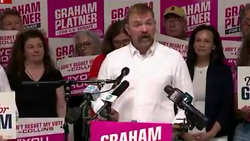
O'REILLY So the word imminent is the problem here.
GRAHAM A hundred percent.
O'REILLY It's the problem. Because Americans, they want to support anti-terror measures. I think most clear thinking people understand Iran is a terror nation. If it's not around, it's better for the world. I think they understand that. They don't understand is, did we have to do this now?
GRAHAM So, there's two things I've learned. I'm 70. Vietnam has cast a great shadow over American foreign policy for a long time. Nobody wants to get in a Vietnam. Iraq and Afghanistan have cast a long shadow over Mideast policy, and I can understand that. So, everything we do, are we going down that road again?
O'REILLY Right.
GRAHAM And the answer is no. But we're not going to sit on the sidelines and watch Iran get a nuclear weapon, imminent. Let me tell you what the facts are, and you tell me if it was imminent. So Jared Kushner and Witkoff are charged by the president to go to the Iranians and sit down and see if you can do a deal over their nuclear program. Now, they've said for generations here, all we want is peaceful nuclear power, countries enrich that have nuclear power. Why should we be different? Why should we be second-class citizens? Why shouldn't we be allowed to enrich, like you do, for peaceful nuclear power? Well, the argument I would give back is that for about 20 years, you've been cheating. You have not tried to develop a peaceful nuclear program. Your enrichment program is well beyond what you need for peaceful purposes.
O'REILLY How do we know they've been cheating?
GRAHAM Because they said so. That comes in a minute. It's been pretty clear that IAEA, everybody has caught them having enrichment capability beyond what you need for commercial purposes. The most you need for commercial purposes is 20% uranium. There is no commercial need for 60%. What does it take to make a weapon? 90. So, 20 is the outside of commercial. 60 is threshold weapons, 90 is weapons. Trump says, go talk to the Iranians, and here's what he offered them. You can have a small enrichment program to save face. We don't want to humiliate you, but it can be designed to go beyond small, right? And we will guarantee you spent fuel supply forever.
O’REILLY And they turned it all down.
GRAHAM Why? Well, because they don't want a nuclear power program. They want the capability to make a weapon because they're religious Nazis. And if you don't believe that you're wrong. And those in the 30s who thought Hitler just was trying to get more German territory, trying to right Versailles, right wrongs, you're wrong. I don't know why people want to kill all the Jews, but Hitler did. I don't why he believed the Aryan race had to be the master race, but he did. I don't know why these nut jobs in Iran want to purify Islam, but they do. I know why they want to kill all the Jews, but they say they do, and I think they would kill us, so that's where I'm at.
O'REILLY Now, here's a provocative question. You've been in Congress for more than 30 years as a rep and a senator. I've been in journalism 50 years plus. I have seen, and I could be wrong because I don't sit there, like you do, a deterioration, generally speaking, of intellect. I'm seeing really dumb people, really dumb people. People who don't know history. They don't really understand that if you don't punish criminals, then the criminals will commit more crimes. These are just basic things that in our country were givens for hundreds of years. And these people like Ocasio-Cortez, who went to Boston U, so did I, and her district is a butt spine. She doesn't know anything. And this woman's gonna be the next, she'll beat Schumer. She'll beat him. Okay, Shumer's done. And when you listen to her, and she doesn't do interviews like this, she would never sit with me in a million years.
GRAHAM Does she write books?
O'REILLY She doesn't know anything.
GRAHAM Well...
O'REILLY Have you seen that across the board?
GRAHAM Here's what I've seen. When I first started this business, you got rewarded for problem-solving. You know, sort of knowing what you're talking about. All the energy now is too loud. Not knowledgeable, just loud.
O'REILLY Right. Partisan.
GRAHAM Fetterman. He's doing what people used to do without even being noticed. So I tried to help Biden deal with Saudi, you know, Israel. I was in the gang of eight for immigration. I've done some things that our base doesn't like because somebody's got to solve these problems. Fetterman is trying to solve problems. Question: Will he make it or not? If you're running in a primary right now, your goal is to get as many eyeballs as you can. And how do you get eyeballs in this world? Be provocative. Provocative has replaced intellect. Provocative has replaced problem-solving. And what I want to do is to say, no, you don't have to be provocative to win. You actually can go to the Mideast enough. My knock is, why are you over there? We need you here. Why aren't you supporting them over there when we're paying more gas prices here? And I say, the reason I go over there is I don't want another 9-11. The last time we took our eye off the ball over there, they killed 3,000 Americans. Then I end every conversation with this thought. Do you think if the Ayatollah had a nuclear weapon, he'd use it? Most people say yes. Well, let's make sure he doesn't do it. And how do you do that sitting over here? I make an argument for smart intervention.
O'REILLY Well, you're a guy who, you're a conservative Republican, but you're at least open to hearing the other point of view, and you have a frame of reference.
GRAHAM Well, I have a frame of reference, which is history, and it goes back to what you just said. Why did people, it's almost as if World War II never happened.
O'REILLY Sure, they don't know.
GRAHAM If you stop people out on the streets, and you ask them, name the Axis powers? They have no idea what you're talking about. In a country who lets that happen, you'll wake up one day and wonder, what happened? Schooling. All I can say is the deterioration of curiosity, willingness to ask questions, and try to solve them. The ability to solve a problem is getting harder because the reward is less.
O'REILLY Wild Alaskan Company is the best way to get 100% wild-caught, perfectly proportioned, nutrient-dense seafood delivered right to your door. Their fish is sustainability-sourced, never farmed, meaning no antibiotics, GMOs, or additives. And it's all frozen right off the boat to lock in the taste, texture, and nutrients. You haven't tasted fish this good. Their memberships deliver flexible shipments, expert tips, options like sockeye salmon, Pacific halibut, and much more. So try it risk-free with 100% money back guarantee today. There is nothing to lose. Not all fish are the same. Get seafood you can trust. Go to wildalaskan.com/bill. With $35 off your first box of premium wild-caught seafood. That's wildalaskan.com/bill, 35 bucks off your order. Thanks to Wild Alaskan Company for sponsoring this episode.
O'REILLY Mandel makes me laugh. I'm not exactly a historical guy, right? But there's something about him that makes me laugh. I paid good money to see Howie Mandel at the Westbury Music Fair in my hometown, okay? And I dragged along a date, and I said to her, Look, she goes, what is this, a talent show or something? I said, no, no. This guy is just, he just gets it, and it's true. And then Howie was nice enough to allow me in the dressing room for 38 seconds. He had a stopwatch, and we just commiserated there. And then when I went on Mandel's podcast, I was surprised a bit because a very successful podcast, Howie Mandel Does Stuff. And people don't know this, but you spent tens of thousands of dollars getting that title, right? Howie Mandel does stuff, then you...
MANDEL I had Does Stuff. I didn't have Howie Mandel secured.
O'REILLY Okay, so his daughter is on the podcast, Jacqueline, she is a liberal woman, and I saw on a few occasions when she was questioning me, and they were all very smart questions. That she's a little disdain there...
MANDEL She gets, I don't know what the language barrier is on this broadcast, but she is accused of having a resting bitch face, which is just, you know, it's genetic. Her mother has the exact same face. So I don't know that it's disdain as much as it's just that expression that she used.
O'REILLY But she, I think, looks upon me as millions of people around the world do, as kind of a Neanderthal. Would you see that?
MANDEL No, but I do think that she thinks that you're of a different thought than her, a different mind than her. And she loves to discuss it. And I know for a fact that she enjoyed your appearance. Does she agree with you? No. Does she want to talk to you? Yes. We are of, and I shouldn't speak for her, but because she's an adult and she is a chalene liberal. But to that end, she is open to hearing from everybody, our whole family is, and the one thing that I have taught my children, as was taught to me, is respect and just respect for everything and anybody. You cannot, you have to earn disrespect. I think, we come into whatever the issue is with respect.
O'REILLY Do you see that philosophy as prevalent in the show business industry?
MANDEL Well, you know, it's very funny because people will talk about prevalence in show business. Show business is just, it is a microcosm of humanity. People who are in showbusiness happen to be, and you are in show business, happen to be recorded and projected out there. And if you're Joe or Dave or Lisa that works at the bank, you aren't. I find it really funny that people in, that not the the people in show business, but the people outside of show business, have this gravitas respect for somebody who pretended to be something, you know, it's just pretending. It's not that big a deal to pretend.
O'REILLY But there are people, and you know them, who say, look, if I say good things about Donald Trump, I'm not going to work. I'm going to lose jobs. And people will scorn me. I won't get invitations to the Hollywood Hills cocktail parties, so I'm not going to say anything.
MANDEL I don't know that that's true as much as what's true is if you get into the... It's not somebody saying something positive about the other side. I think it's when the rhetoric has gotten beyond compliments or even something positive or negative. The rhetoric becomes... It's rhetoric. It's not positive or negative. It's, you know, you're an idiot, you're a racist, it becomes name-calling. Or if you are kind of framing somebody who thinks different than you in this negative frame, then they don't wanna spend time with you. So I don't know that you're gonna lose jobs because you're, I think there's Republicans and right-wing people doing very well in this business.
O'REILLY All right, but there is a perception out there. Now, I was in a restaurant off Melrose a few years ago, and Chelsea Handler walked in. You know her, right, Chelsea?
MANDEL Yeah.
MANDEL Okay. Lively lass, would you agree?
MANDEL Lively lass.
O'REILLY Yeah.
MANDEL That's a word that hasn't been uttered or two words that haven't been uttered since the late 50s, Bill.
O'REILLY I'm a Renaissance guy.
MANDEL Lively lass.
O'REILLY So anyway, I'm sitting there...
MANDEL You're not on a dating app, are you? Because do you look for lively lasses?
O'REILLY No, I'm just trying to set the scene. So I'm sitting there eating my tofu on Melrose Avenue, and she walks over to the table, there were a few other people with me, and she goes, 'You're not allowed to be here in L.A.' So I said, All right, check please! We'll leave immediately. But there was an edge there that, oh boy, and that's what I was talking about.
MANDEL So you don't think she was just trying to be funny?
O'REILLY I don't know her well enough, maybe?
MANDEL I'll tell you, she's a comedian, and she's smart, and she's outrageous, and she's outspoken, and that seems on brand for her. Is she really perturbed that you are sitting eating tofu on Melrose? I doubt it. I doubt if it affected her for one brief moment.
O'REILLY I think she just wanted to give me a hard time.
MANDEL I have a hard time with my mental health. I have a really good life, but I have a hard time, but you know that. Comedy for me, and I believe, you know, having a sense of humor is not the ability to tell a joke or to laugh at a joke. A sense of humor is to find that sensibility in the darkest place. All comedy comes from darkness. All of it. If you laugh at a clown falling down at the circus, what are you laughing at? You're laughing at a stranger's misfortune. If you're telling a joke and two guys walk into a bar, it's not a joke unless something embarrassing, awkward, or horrible happens to one of them. That's the joke. That's what a joke is. And if you look at the two masks of theater, comedy and drama, they're very close. There's such a thin line between drama and comedy. In fact, comedy is just looking at something incredibly dramatic from another way.
O'REILLY When it doesn't go well, that's the toughest time for a comic, but you have a persona where you kind of just roll along, and you know.
MANDEL Not really. That's the persona. You see, the tough time, I've always used the analogy for me for stand-up. I love thrill rides. I love roller coasters. And if you look at what a roller coaster is, the higher you go, the faster you go, the closer to being dangerous or being killed, the better it is. I mean, if you like roller coasters and you just went on a little straight track that never went up or down a hill, you'd be bored. But your adrenaline is going when you're being dropped 19 stories. By the same token, in those moments when it doesn't work and your adrenaline is running, and there's thousands of people who you've never met looking at you, going, well, what's happening? That adrenaline, that excitement, that ability to try and reel them back and get a laugh or get them to appreciate the moment is the joy, the thrill, and the excitement that makes me feel alive.
O'REILLY David Letterman, so in '79, you did very well on Letterman.
MANDEL I opened for him a couple of times, and you know, when I came to the Comedy Store, he was the he was MC in '78 and '77 at the Comedy Store. He had just moved out here from being a weatherman someplace in Indiana or Indianapolis. I don't know where he was a weatherman. So, I was there like when he started, and to watch all these guys, we were all these young, you know, dreamers just who were, you know, kind of mischievous little kids, who found this clubhouse where all these like-minded people, semi-like-minded, people got together and had fun. It was like the Wild West of, I mean, it was the comedy boom of the 80s. Actually, I did well on Letterman, but for years and years and years, in the world of comedy, the toughest crowd are fellow comedians and the meanest crowd to other comedians are comedians. And because when I started out, I used to use a lot of, I was just this hyper guy that had a ton of props. And this is before people would make fun of Carrot Top, who I think is actually brilliant and has the ability to hold an audience and his own room in Vegas all these years. And he designed, not only does he write whatever he's verbalizing, but he has to design and engineer these great little props. But I had props, this is, before he even started, and I was a joke amongst the comedians, you know, people loved brilliant wordsmiths, like your friend Dennis Miller and other people, a monologist. And part of Letterman's top 10 list, sometimes I was mentioned as the joke. They go, and we'll make them go to a Howie Mandel. You know? That hurt me because you want your fellow...
O'REILLY Yeah, you want that prestige from the guys.
MANDEL I went and did, Kelly and Mark, in New York. Go look at Page Six.
O'REILLY Yeah, I saw it.
MANDEL I did a joke.
O’REILLY I know. They don't care.
MANDEL They said I snapped, but I think that's kind of funny. That doesn't really bother me, and more people probably read these articles than saw the show. So, they think that I'm really sensitive about my age. I didn't snap, and I wasn't sensible about my age. I do snap, I did not snap there, and I didn't snap on TV, and I don't snap on the stage, but being on TV or being in front of a camera or being on stage is such a small part of my life, even though I do a ton and I post a lot of things. 99% of my life is not being recorded, like you.
O'REILLY Yeah, but I'm boring, and you're not. That's the difference. And we really, really appreciate you taking the time, Howie. It was very kind of you to do it. If we can ever return to favor, you just let us know.
MANDEL Right back at you, buddy. If you ever need anything, I'm here.
O'REILLY Thank you.
|